Pages

Tuesday, June 17, 2014

Guided Math Ch. 4 Using Guided Math with the Whole Group

There is a time and a place... but... CAUTION:  Use sparingly!!  lol

ADVANTAGES:
  • instructional planning is simpler
  • used to kick-off a new instructional unit
  • spend more time in direct teaching
  • used to build a sense of community
  • can be used to review
DISADVANTAGES:
  • most times students are not on the same level
  • difficult to keep all students engaged
  • limited student communication time
  • only able to spend brief amounts of time with some students--not all
Sammons also suggests teaching and training your students to be able to assess their own learning using a rubric or another assessment tool.  Also, she says to set learning goals and have the students track their progress.  This is something I want to implement next year.  My goal is to let the kids know what is expected of them and discuss with them what are realistic/reasonable goals and why it is important to set goals for yourself.

What can I do during a whole group lesson?

MINI LESSONS:
  • teacher directed
  • NO more than 10 min  **the more you talk the more kids you loose!
  • clearly identify the teaching point
  • limit student talk--not a free for all share
  • demonstrate the teaching point
  • use familiar context for problem solving
  • match the active engagement to mathematics teaching point
What is that going to look like:

Connection--
  • with yesterday's lesson
  • with the ongoing unit of study
  • with students work
  • with an experience outside of school
Teaching Point--
  • present verbally 
  • demonstrate or model
Active Engagement--
  • students try out a skill or strategy
  • students act like researchers as they watch a demo
  • students imagine trying a skill or strategy
  • students plan out work aloud
Link to Ongoing Student work--
  • students turn to their own work and apply teaching points


ACTIVATING STRATEGIES
  • K-W-L chart * I would also have a section for misconceptions and connections made     OR    1st colunm- What do you know for sure?    2nd--What are you trying to find out?  3rd-Are there any special conditions in the problem?
  • Anticipation guide-set of questions about the upcoming unit there is a BEFORE and AFTER column for the students to mark true or false before and after the unit study
  • Word Spalsh-the relevant vocabulary is on a chart at the start of the unit.  The students will make connections to the words and their prior knowledge
MATH LITERATURE:

This is a no-brainer!!  What kids do not like to be read to??  And lets face it what student doesn't  love to be read to!!  Use a think-aloud to help students recognize the math/lit. links from the story.  The stories can be used to help illustrate the real life value of the math concept being studied.


Set stage for Math Workshop:

This is your time at the start of the year to set expectations and procedures so that when you are pulling small groups your students will not interrupt.... Just like in Guided Reading!!  (are you seeing a theme here???)

Math Huddle is when the students are brought together to "communicate their ideas, solutions, problems, proofs, and conjectures with one another."   During this time the students are held accountable for expressing ideas, listening thoughtfully, and justifying their mathematical thinking.  This time will be instrumental in building your classroom community.  During the Math Huddle the expectations are set for mistakes to be made in a save environment, use those misconceptions as a learning opportunity, and the teacher is the facilitator--NOT the leader.


Whole group is also when practice and reviews can take place.  Types are:   pencil & paper tasks, games & music, and assessments.

I am sad to say that I felt there was TO much time spent in whole group..... for lots of reasons!!  But,  guided math is what I REALLY want in my classroom... And, I know guided math is the way to go and is my ultimate goal!!


I think it is great to introduce a new concept.. That is one of my goals to really fine tune the 5 step WBT lessons which are by design to be short!!  Which will get me to guided math sooner!
At times it was beneficial to use a whole group lesson; one time was when talking about fractions and we read the book Hershey's Milk Chocolate Fractions Book.


a Rafflecopter giveaway


Thursday, June 12, 2014

Guided Math .... Ch 3 Using Math Warm-ups

In this chapter Laney Sammons discusses the importance of some type of morning warm up for students.  The point you ask:
  • make subtle mathematical shifts in their thinking
  • begin to see patterns & generalizations
  • develop personal understandings of math concepts
  • connect concepts to "real-life" examples
  • "conditionalize"  understand the conditions and purpose of an algorithm (as opposed to rote memorization)
What can I do you say:
  • Question of the Day (QOD)
  • Number of the Day (NOD)
  • What comes Next?
  • How did my family use math last night?
  • ___________ makes me think of......
These are great, but when and how am I going to fit this in....  WITH EVERYTHING ELSE?!?!?  You ask?
  • it is BRIEF --L.S. suggests 20-30 min. at the start of the day (I know I panicked too!!  But if you include the time the students are independently involved and the discussion time it could work!! Also, this could be a goal to work up to as your year evolves.)
  • ALL students can participate...they are the PRIMARY contributors eventually 
  • DAILY repetition (promotes mathematical thinking)
  • it can be used to introduce a concept, be a review, or a concept you are currently in
  • nonthreatening task (generates mathematical communication)
Oh no!!  Wait you said a discussion too?!   Yes!  This is crucial!  You are able to do quick informal assessments of your students knowledge as well as misconceptions.  The teacher will follow a gradual release of responsibility to the students  from think-alouds (highest teacher support), to independent student analysis (lowest level of teacher support).  The best part is that you will incorperate both oral and written mathematical (math journals) thoughts!  And what student does not need more practice in these areas!! 

A key word that stuck out at me when reading this chapter was "inferences or infer".   OMG...light bulb moment!  Again this goes back to how obvious things are in reading and guided reading but we forget when it comes to math.  I would have never used that term but yes!!  Thats what we do in math, so why not carry that skill over intentionally for our students.

Types of discussions:
Think-Alouds:      Highest level of T support 
  • discusses the reason for choosing a specific graphic organizer
  • share observations and inferences made
  • model the use of relevant mathematical vocabulary
  • records on chart paper for future reference
Guided:  Moderate to high level of T support
  • uses carefully crafted questions to guide discussion of observations and inferences from data
  • occasionally rephrases students comments to model relevant mathematical vocabulary and concepts
  • helps students consider the appropriateness of graphic representations
  • records analysis on chart paper for future reference 

Facilitated:  Low to moderate level of T support
  • poses open-ended questions to stimulate discussion by students
  • ensures that discussions stay focused on observations, inferences, and choices of graphing representations
  • analysis may be recorded on chart paper by students or teacher or in Math Journals
Independent:  Lowest level of teacher support
  • records observations, inferences, and choice of graphing representations by students in Math Journals before discussion
  • Discussion of journal reflections primarily by students with T support (keep the focus or correct misconceptions)
As with a weekly possible guideline for Guided Math; Laney Sammons also gives a possible guideline for Morning Math Stretches:

Day of the week:      Morning Stretch:             Topic:
MONDAY                    NOD                               180
TUESDAY               What's Next?                   1, 3, 9, 27, .......
WEDNESDAY       How did my family         How long to make
                               use math last night?          dinner? (real life)
THURSDAY        ____ makes me think of....          multiplication
FRIDAY             data collection                         QOD
             

I did start the year off with a QOD; sadly due to "everything else"  we did not keep up with it.  I kinda got board with it also.  Now I can see how we can start each day off with something differnet and that I need to set it up for my students to eventually take over.  I may also have said before that I started the year off with the Rise and Shine binder from Reagan Tunstall.  This is amazing!!  I loved how my students came in and got started.  I do have bigger and better plans for it for next year--I did not utilize it as much as I could have.  My goal is for my students to think of it as a go to resource for math.

Types of connections to students can make:  Math to Self, Math to World and Math to Math
This is an area that sad to say I have not put enough focus on.  Defiantly thinking of what I can do next year to be more intentional.


FREEBIE-- this is a page that I created to add to our R&S binder:

Monday, June 9, 2014

Monday Meet Me!

HI!!!  Happy Monday... it is mu first OFFICIAL day of summer!!  WOO HOO  I am linking up with The Teaching Tribune and LOTS of other wonderful teachers.


So her are a few things to get to know me :)


 If you are on Summer break  take some time to rest and relax.... If not then you can do this!!


Thursday, June 5, 2014

Guided Math Chapter 2-Using G.M. to Create a classroom environment of Numeracy

In Chapter 2 the comparison; or rather, contrast is made between Guided Reading and Math.  In Reading it has become a MUST to have print EVERYWHERE!  Letters and words that are both familiar and challenging to our students are found all around the room.  It has become second nature.  But sadly, this is not the case in math.  I know this to be true for myself!  I don't have a math word wall.  I don't make sure there are math problems around the room to read.  I don't have a math library.  I don't have a math "word work" station.  I did not give the same focus and intentionality to setting up my math time that I gave to my Daily 5 expectations.  And when my students were loud, off task, and crazy it was MY fault!!  Did you hear that.....it was NOT them it was ME!!  (gasp!!)  I actually sat down (and it was probably after reading this chapter earlier in the year :) and apologized to my class that we have not been giving the same structure and modeling to our math as we did to our Daily 5.... and so we did!!  No things were not perfect...but they were MUCH better!!  

In a nutshell: Foundational Principles for Guided Math-
  • all children CAN learn
  • numeray-rich environment promotes mathematical learning for students
  • learning is a social process
  • learning math is a constructive process
  • organized classroom supports the learning 
  • modeling, think alouds, and opportunities for problem solving and purposeful conversations
  • children are responsible for their learning
Laney Sammons then goes on to discuss how to build a learning community, what message classroom arrangement can give off to students,  that you need both a small group and large group meeting place (the same as guided reading AGAIN!!), importance of proper organizing of manipulative, and how to build a numeracy rich classroom.  She also says that students should begin every morning with a math related problem.  The use of a Problem of the Day (PoD) gets students to explore, investigate, and hypothesize via active engagement.  She also says to record several different ways to get the same answer.  I do have to say that I tried to do this often!

So what do you need for a numeracy rich classroom??  Well, if your already doing guided reading (notice a theme??) then just about the same things!!

  • calendar
  • word wall/vocabulary display
  • manipulatives
  • PoD
  • math journals
  • graphic organizers
  • class made charts
  • math related literature
  • books made by students

For me the MOST important principals are:  all children can learn, learning is a social process, organized classroom supports the learning, modeling, think-alouds, and opportunities for problem solving and purposeful conversations.  I have made a conscious effort from day one to NOT focus on "the answer".  I have stressed "the why" and "how" of the problem.  I have also made it a point to emphasize there is more than one way to solve a problem and I am not always right!  It is OK to make mistakes.   I do feel that Wholebrain Teaching has really helped out with the math wall and helping students to learn how to communicate to the class and each other their thinking.  WBT has what are called "Power Pix" it is a type of anchor chart for a specific skill.  Then when students have "mastered" the term they go on the "Power Pix wall" to be used for review, games, or attention getters during the year.  (Sorry I will post pics later... I can't seem to find them!) But here is the link to my freebies..

http://www.teacherspayteachers.com/Product/2nd-Grade-Power-Pixs-Math-806555
http://www.teacherspayteachers.com/Product/Power-Pix-wall-label-pencil-labels-815473

Also, the "Teach/OK" really helps the students in becoming engaged, active communicators with others.

What I want to do MORE of:  
  • interactive journals-AND get my students to go there 1st!
  • charts
  • math writing
  • math literature & student made math lit.
  • use of graphic organizers-I never thought to use a Venn to compare addition and multi.!!


I do!  And mostly because of what I mentions earlier!  I really focused not they "why",  I tried to get at least 3 different ways to solve a problem, and I expected my students to answer in complete sentences....  You would be surprised how that really got them thinking!


a Rafflecopter giveaway


Thursday, May 29, 2014

Guided Math... A Link Up! & and a freebie


I am SO excited to be linking up with  The Primary Girl and some other great teachers as she hosts this book study of Guided Math:  A Frame work for Mathematics Instruction by Laney Sammons.
I read Guided Math at the beginning of this school year.  I was very excited but have to admit that it was not what I expected...

Don't get me wrong!!  It is a GREAT must have book but I think I expended it to be more along the lines of Math Work Stations by Debbie Diller or Number Sense Routines: Building Numerical Literacy Every Day in K-3 by Jessica Shumway... Both of which I have and are MUST haves...  They might just be the Guided Math Trifecta so to speak.

So back to Guided Math....  It is more technical than the two other books I mentioned; so at times, it got a bit heavy for me and also I did not have anyone to bounce ideas off of or chew over what I was reading....  It does not help that I was probably on a crash course to get to the finish line so to speak!!  lol    So with that being said I am SO excited to be linking up with some other FAB teacher/bloggers.  I can't wait to eat up their pearls of wisdom!  Before I launch into my "deep thoughts" on Ch 1 let me first let you know that this is my 2nd year back to teaching after 12 at home and my first ever in 2nd grade--I have always been in K or younger.  OH and sorry this is long!

Chapter 1-Guided Math:  A Framework for Mathematics Instruction

Laney Sammons does a great job of introducing the concept and need for Guided Math; which is a relatively new concept in education I believe.  It was like she could see right into my head and knew the ultimate goal I had for my math block.  Since 3rd grade I unequivocally would describe myself as NOT a math person!!  That is when I remember my swiss cheese knowledge of math concepts started.  I just did not "get it".  Math=Whaawhaa (can you say Charlie Brown!!)  I have a confession to make:  I am in the 71% of people who cannot calculate miles per gallon on a trip and the 78% of the population who cannot explain how to calculate interest on a loan...  Just typing this makes my brain say "whaawhaawhaa"

The focus in math for too long has been on knowing the procedure NOT the WHY and I want my kids to know the WHY!!!  Sadly, the changes that have taken place in favor of guided reading so long ago did not happen in math... And I ask why not???  And just as sadly, there are still too many teachers that feel the "drill and kill" is the ONLY way to go....  I have a teacher on my hall that upon seeing me bust out the place value mat and base 10 manipulative with a student that was still not getting the 2 digit addition (long after introduction) said "My class would not know what that is; but they CAN work the problems."  *(this teacher is a GREAT teacher!!)  but obviously we are on different teaching philosophies...  But that is another story.   Anyway, my point is that I see myself in this students that have NO IDEA what they are doing and will NEVER get it.  Many of the "new" math ideas make SO much sense to me!!  They get me excited to learn and teach math!!  CRAZY!!  I would have told you two years ago NEVER!!  But many of the teachers out there think they are a waste of time and hate to teach them...  Trust me I get not being comfortable or even not liking different topics... but if you only teach ONE way you are only teaching to ONE student.  Laney Sammons talks about creating a "culture of numeracy"; active, authentic engagement.  A classroom culture "willing to take risks" and "share their thinking with others".  One way to achieve this is to have a "Number of the Day" activity in the morning.  There are MANY ways to do this... just do a search on Pinterest!  You won't be disappointed.  She even says that whole class interaction has its own time and place in guided math-it just can't be the only way.  Guided Math should have both formal and informal assessments to create your groups and they should be fluid...  This is something that I admit I have not done.  I created the groups and they stayed that way.  I could not quite figure out how to change them up and not hear "Mrs. O'Neal I already did that...."  I have 5 groups of 4 students and I have these stations:  Math Journal, Seat Work, Technology, Math Tubs, and Teacher (which sometimes I would make Partner Games if I did not want to be stuck with one group and wanted to be more flexible in my work with students).  I only change out journal work and seat work weekly--the math tubs I have 5 tubs and tried to have a mix of specific actives with a record sheet and more open ended that could be repeated if the students wanted.  This is not perfect or exactly what I want but it has evolved and worked for me this year.

She also alines Guided Math to reading groups; and that you should to be just as intentional in your introduction and expectations in the beginning of the year with your guided math workshop as you are in ELA  **something I learned!!  (early on I had to stop and regroup and apologized to my students that I did not give the same weight to our math time as I did to our D5 learning!  We paused and slowed down to make the anchor chart and really get into the same discussion and modeling of math stations as D5.  You should approach Guided Math the same as with Daily 5 for example.  You want to begin with the teacher giving total support and gradually through modeling and discussion release responsibility but be available for support.  Finally the last stage is when the students are in charge of their learning; they have assumed full responsibility.  This now leaves you free to work with the groups with little to no distractions.  The beauty of Guided Math is there is NO right or wrong way!!  Did you hear that?!  You as the teacher; knowing your students the best, needs to create as system that works for you.  Luckly if you are new to this (as I was) Laney Sammons has provided a possible weekly schedule:

Monday:  Whole Group:

  • activating strategy
  • problem solving think-aloud by teacher
  • explanation of independent work for the week
Tuesday:  Whole Group, Workshop, Conferencing, Small Group
  • mini lesson (read-aloud of math literature)
  • independent math work with teacher (teacher is conferencing for 10-15min.)
  • meet with Group 1
Wednesday:  Whole Group, Workshop, Conferencing, Small Group
  • problem challenge mini lesson
  • indep. math work--teacher is conferencing
  • meet with Group 2

Thursday:  Workshop, Conferencing, Small Group
  • indep. math work--teacher is conferencing
  • meet with Group 3
  • meet with Group 1 again
Friday:  Whole Group
  • math huddle--students share observations, problem solving strategies (student lead)
  • create an anchor chart as a classroom reference
At the end of each chapter there is a review and reflect:


Currently I feel my groups have really evolved into successfully independent workgroups.  Groups of 4 seems to be the right fit for this class.  I feel that I am successful in meaningful work also... Not just busy work.


I have not felt as if I have a balance of whole group, small group, and conferencing.  I strive to spend as much time in small group as I can.  But then there is the pressure to make sure the students can be prepared for the assessments--again I feel that I teach the opposite of my co-teachers so the pressure to not have scores be very far behind theirs is there...  I would like to be able to have an effective system to switch up my groups more often.

3.  Does your math instruction lead your students to a deep conceptual understanding of the math standards that they are learning?  If so what are you doing that contributes to that?  If not, how do you think you would like to change your teaching?
I would like to think that at times yes.  I encourage discussion on "how" and "why"--NOT on the correct answer.  I try to show several ways when possible.  But of course in my mind I think of the students that I just wish I could do more-have more time with....  That is a struggle we all have... If now then it might be time to do something else....

I would really like to challenge you to step out of the box with your math block.  I would love to discuss with you if you have ideas, get stuck, or just don't know where to start!!  Strangely enough this is becoming a passion of mine--if you had told me two years ago I would have said your crazy!!  There is so much more I could write about but I won't ;)....

Do not forget the giveaway!!

a Rafflecopter giveaway


As a thank you for staying and reading this far here is freebie for you!

Doubles Workmat


Wednesday, May 28, 2014

WOW!! Check it out!! I'm in Educents!!!

OH Boy!!  I can not believe it!! (to the Little Einstein tune)  We have OFFICIALLY have 8 days left... It has been a bit of torched lots of fun still working and learning!  We have been studying Freckle Juice and we started our EOY memory books by Flapjack Learning.  If you don't have a set activity this is SO great!!  My kinders loved it and I am excited to see what my 2nd graders are going to do with it!.

As we all do even though we are ready sad for the year to be coming to an end we have the wheels turning for next year.  One of my goals is to implement student data tracking-where the students are actively setting goals and keeping track of their performance.  I am so excited to use this resource created by Diary of a Not So Wimpy Teacher.

 I have also teamed up with Educents with some instant downloads for you! It includes printables, centers, games, and much more for your finishing first and second graders!  It makes learning fun with bubble gum, oceans, QR codes, flip flap books, and more!  It's a mixture of reading, math, and science to keep the kids working hard through the summer and to get them ready for second and third grade!


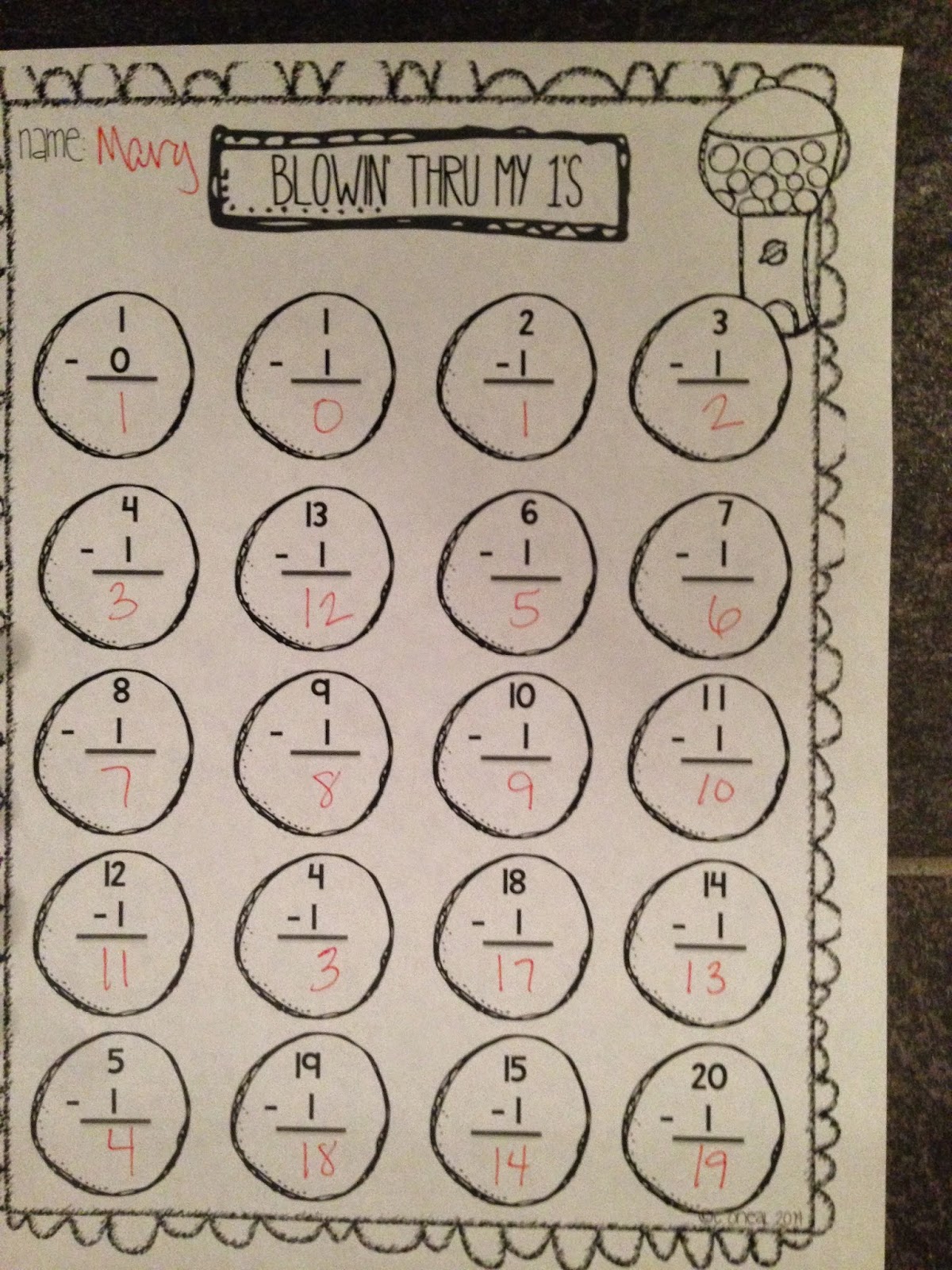
My product included will surely be loved by your students!  My first product is a fun way to have your subtraction fluency test using a cute bubble gum theme.  Included are a teacher checklist as well as a mastery sheet for the students to track.  The second product is a QR activity for tables.  This is sure to add a bit of spice to your day!!  


 Here are a few of the other great products you will receive!


For a limited time it is $14.99 from Educents which is about 75% off!  
14 instant downloads with over 540 pages of materials perfect for your finishing first and second graders!


You can also take peek at some of the other products included in the bundle at any of the links below!
http://www.educents.com/first-second-grade-summer-learning-fun.html#kickinitwholebrainintexas 

Monday, May 5, 2014

Stopping in!! Linking up

I have been the worst about blogging lately!!  Just so much to do and not enough time!!  But I am stoping by to let you know I am linking up with Primary Possibilities my store will be on sale!!  So stop by and buy!